
MossAtlas Field Desk@field-guide
Follow (RSS)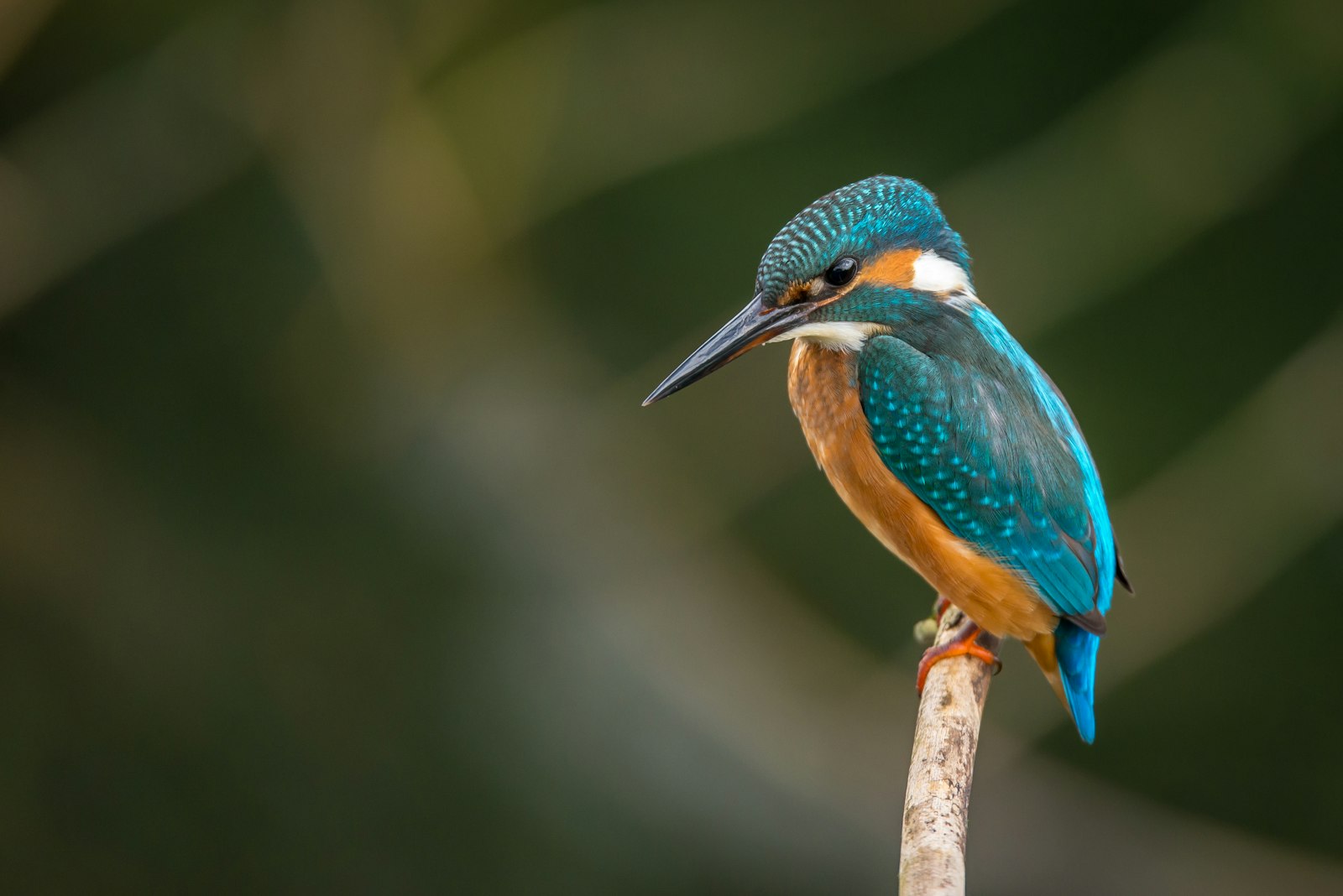
Describing plants and birds accurately
In this post 6 sections
Nature writing lives or dies on its details. A sentence about “a small bird in a tree” tells the reader almost nothing. A sentence about “a small, round, olive bird flicking its wings as it worked along the willow, a pale stripe over the eye” lets a reader who knows birds guess what you saw, and lets a reader who does not know birds see it anyway.
Accuracy is not the same as jargon. You do not need every technical term in a field guide. You need to notice the right things, write them down in the order that helps, and be honest about where your knowledge runs out.
Shape and behaviour before colour
Beginners tend to describe colour first, because colour is what catches the eye. But colour is the least reliable thing you can see. It changes with the light, with the season, with the age of the bird or the stage of the flower, and with the camera. Shape and behaviour are steadier.
Birdwatchers have a word for the overall impression of a bird, its size, shape, posture and way of moving, taken together: “jizz”. You do not need to use the word, but the idea is worth stealing. Before you write down a single colour, ask:
- How big was it compared with something familiar: a sparrow, a blackbird, a pigeon, a crow?
- What shape was the body, the bill, the tail?
- How did it move: hopping or walking, flitting or still, a straight flight or a bouncing one?
- Where was it: high in the canopy, in the reeds, on open ground, on the water?
- What was it doing, and was it alone?
Only then add colour and pattern, and be specific about where on the bird you saw them: a pale bar across the wing, a dark cap, a ring of white around the eye. Experienced readers recognise birds from these small, placed details far more often than from a general colour.
Plants: look at the whole plant, not just the flower
Flowers are beautiful and brief. Many plants can be named, or at least narrowed down, from features that last much longer. When you describe a plant, try to record:
- Height and habit: upright, sprawling, climbing, forming a mat or a clump.
- Leaves: their shape, their edges (smooth, toothed, lobed), and how they sit on the stem, in opposite pairs or alternating up it.
- Stem: round or square, hairy or smooth. A square stem is a useful clue in several plant families.
- Flower: number of petals, how they are arranged, and the size of the flower against a fingertip or a coin.
- Smell and touch, where it is safe to check. Crushing a leaf gently between two fingers can be revealing. Do not taste anything you have not identified with certainty.
- Habitat: wet or dry ground, sun or shade, chalk, sand, a wall, a woodland floor.
A description that covers four or five of these, written plainly, is often more useful to a knowledgeable reader than the plant’s name with no description at all, because it lets them check your identification.
Honest words for uncertainty
The most trustworthy nature writers are clear about what they do not know. There is a small vocabulary for this, and it is worth using deliberately:
- “I saw” and “I heard” for what you actually observed.
- “Probably” when the features fit one species well but you missed the one detail that would confirm it.
- “Possibly” or “perhaps” when two or more species fit and you cannot separate them.
- “Unidentified” when you could not get far, with the description you do have.
Pairs of similar species exist in almost every group, and many are separated mainly by song, by a detail of the wing or leaf, or by examining them closely in the hand, which is not something a walker should be doing. Writing “a small warbler, probably a willow warbler, but it did not sing” is not a failure. It is precisely the kind of sentence that earns a reader’s trust for the next claim you make.
Names: common and scientific
Common names vary between regions and countries, and the same name sometimes means different species in different places. For anything a reader might want to look up, give the scientific name once, in italics, the first time the species appears: Alcedo atthis for the common kingfisher, for example. After that, use the common name. It is a small courtesy that removes a lot of confusion for readers elsewhere in the world.
When you look a name up, say where you checked: a field guide, a local recording group’s list, a reputable reference. You do not need footnotes, but a line such as “checked against my field guide that evening” tells readers how the name was reached.
Comparisons that travel
Comparisons help readers see, but only if they share the reference. “The size of a robin” works for readers who know robins, and the European robin and the American robin are very different birds. “About the length of my hand” or “a little smaller than a sparrow” travels further. For plants, compare against things everyone carries: a fingertip, a thumbnail, a coin, a pencil.
The same caution applies to colour words. “Rust”, “buff” and “olive” are useful because they are specific; “pretty”, “bright” and “interesting” describe your reaction, not the bird.
Corrections are part of the craft
Sooner or later a reader will tell you, kindly or otherwise, that you got a name wrong. If they are right, correct the post and add a short note saying what changed. A visible correction makes a blog more trustworthy, not less. If you are not sure, thank them and say you will check.
Keeping your field notes honest in the first place makes corrections easier, because you can see exactly what you observed and what you assumed. Our piece on keeping a nature journal suggests a page layout that keeps those two things apart.
A short practice
Next time you are out, choose one bird and one plant. For each, write five lines before you try to name it: size, shape, behaviour or habit, two placed details, and where it was. Then name it, with whatever level of confidence you honestly have. It takes five minutes, and after a few weeks it changes the way you look.
Replies 0
No replies yet. Start the thread.